
7 U.S. Food Export Requirements Indian Businesses Must Check Before Exporting
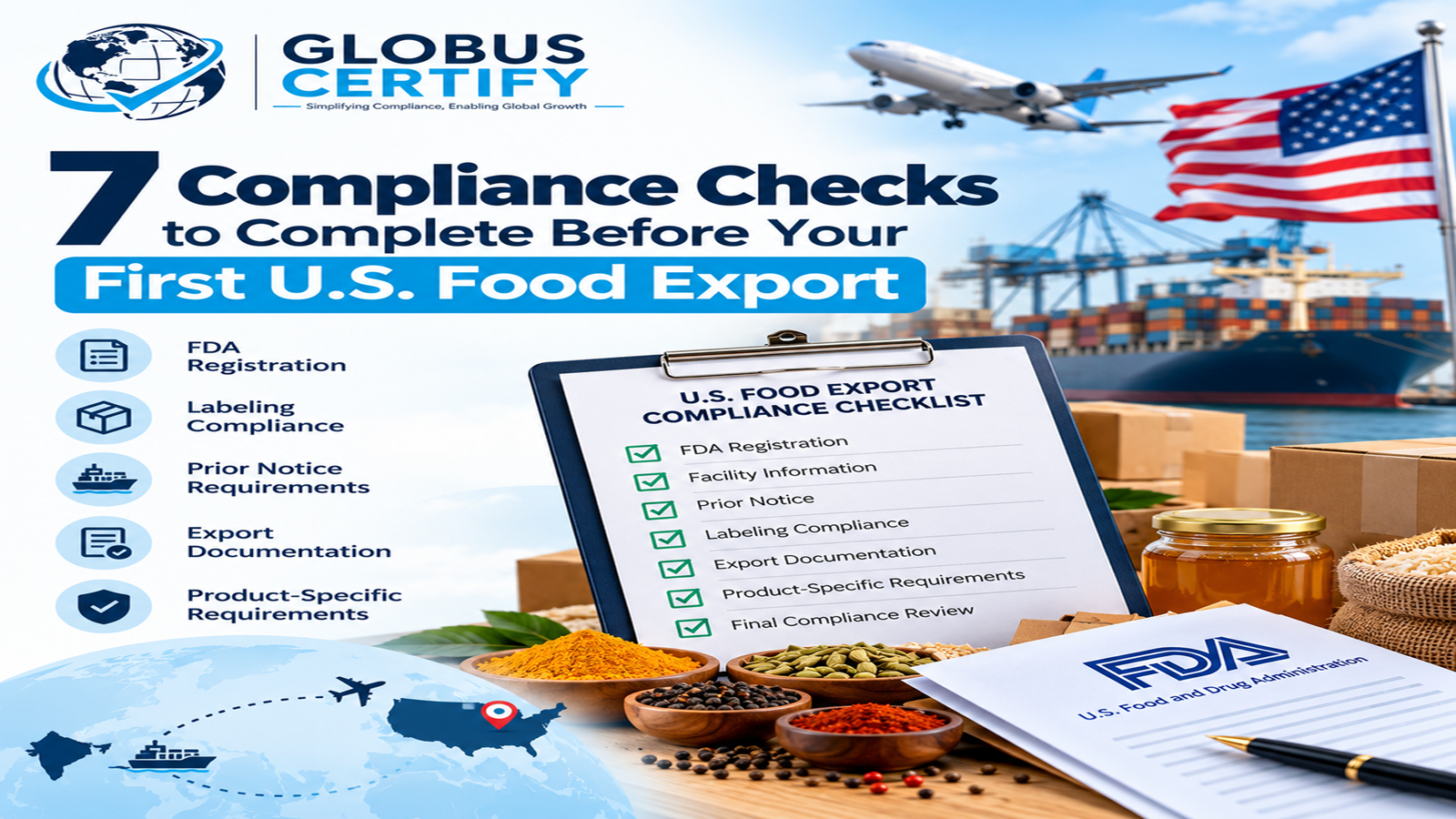
Exporting food products from India to the United States can open a major international market for manufacturers, food brands, traders, and exporters. However, having a good product is only one part of the process. Indian businesses must also understand and follow the U.S. food export requirements before shipping food products to American buyers.
The U.S. Food and Drug Administration (FDA) regulates most food products entering the United States. Depending on the product and business activity, exporters may also need proper facility registration, labeling compliance, prior notice, documentation, and other regulatory checks.
Here are seven important compliance checks Indian businesses should complete before their first U.S. food export.
1. Check Whether FDA Registration Is Required
One of the first U.S. food export requirements to understand is FDA registration.
Facilities that manufacture, process, pack, or hold food intended for consumption in the United States generally need to comply with FDA food facility registration requirements, subject to applicable exemptions.
Before exporting, Indian businesses should determine whether their manufacturing or storage facility falls under the applicable FDA requirements. Incorrect or incomplete registration information can create problems when shipments arrive in the United States.
2. Verify Your FDA Facility Information
FDA compliance is not simply about having a registration number. Businesses should make sure that their facility information, business details, product information, and other required regulatory information are accurate and up to date.
Indian exporters should review their compliance information before shipping rather than discovering an issue after the shipment reaches the U.S.
Keeping regulatory information consistent across business documents can also help reduce unnecessary confusion during the import process.
3. Understand FDA Prior Notice Requirements
Another important requirement is FDA Prior Notice.
Prior Notice provides the FDA with information about food shipments being imported or offered for import into the United States. The requirement generally applies to food products covered by the relevant FDA rules.
Indian exporters should understand who is responsible for submitting Prior Notice and what shipment information needs to be provided.
Missing or incorrect information can potentially result in delays or other problems at the U.S. border.
4. Check Food Labeling Compliance
A product can meet manufacturing requirements and still face problems because of incorrect labeling.
Before exporting, Indian businesses should review their food labels for applicable U.S. requirements. Depending on the product, this may include information such as:
- Product identity
- Net quantity
- Ingredient declaration
- Allergen information
- Manufacturer or distributor information
- Nutrition information
- Other applicable labeling statements
The exact requirements can vary depending on the type of food product.
Therefore, exporters should review their labels specifically for the U.S. market instead of assuming that an Indian-market label will automatically meet U.S. requirements.
5. Prepare the Correct Export Documentation
Documentation is another major part of U.S. food export requirements.
Depending on the shipment and product, exporters may need commercial and shipping documents such as invoices, packing lists, product information, certificates, and other applicable documents.
The exporter should ensure that information such as the product name, quantity, manufacturer details, consignee information, and shipment details are consistent across relevant documents.
Proper documentation can make the export process more organized and help avoid preventable issues.
6. Identify Product-Specific Requirements
Not every food product follows exactly the same compliance pathway.
Spices, processed foods, beverages, seafood, dairy-related products, dietary products, and other categories can have different regulatory considerations.
Before exporting, Indian businesses should identify the exact product category and check whether additional U.S. requirements apply.
This is particularly important for businesses exporting a product to the U.S. for the first time.
7. Review Your Complete Compliance Checklist Before Shipping
The final step is to conduct a complete pre-export compliance review.
Instead of checking individual requirements separately, exporters should create a checklist covering:
- FDA requirements
- Facility information
- Prior Notice
- Product details
- Label compliance
- Export documentation
- Importer information
- Product-specific requirements
A pre-shipment compliance review can help identify potential gaps before the goods leave India.
Why U.S. Food Export Compliance Matters
The United States is a large market for Indian food products, but entering the market requires more than finding a buyer and arranging international shipping.
Understanding the U.S. food export requirements before the first shipment can help Indian businesses reduce compliance risks, avoid preventable delays, and build a more reliable export process.
If you are an Indian food manufacturer or exporter planning to enter the U.S. market, reviewing your regulatory requirements before shipping is an important first step.
Need Help With U.S. Food Export Compliance?
GlobusCertify helps Indian businesses understand and manage regulatory requirements for international markets. From FDA-related compliance and documentation to broader export requirements, professional guidance can help businesses prepare for international expansion with greater confidence.
Planning your first food export to the United States? Get your U.S. food export compliance requirements reviewed before shipping.