FDA Registration vs FDA Approval: Key Differences
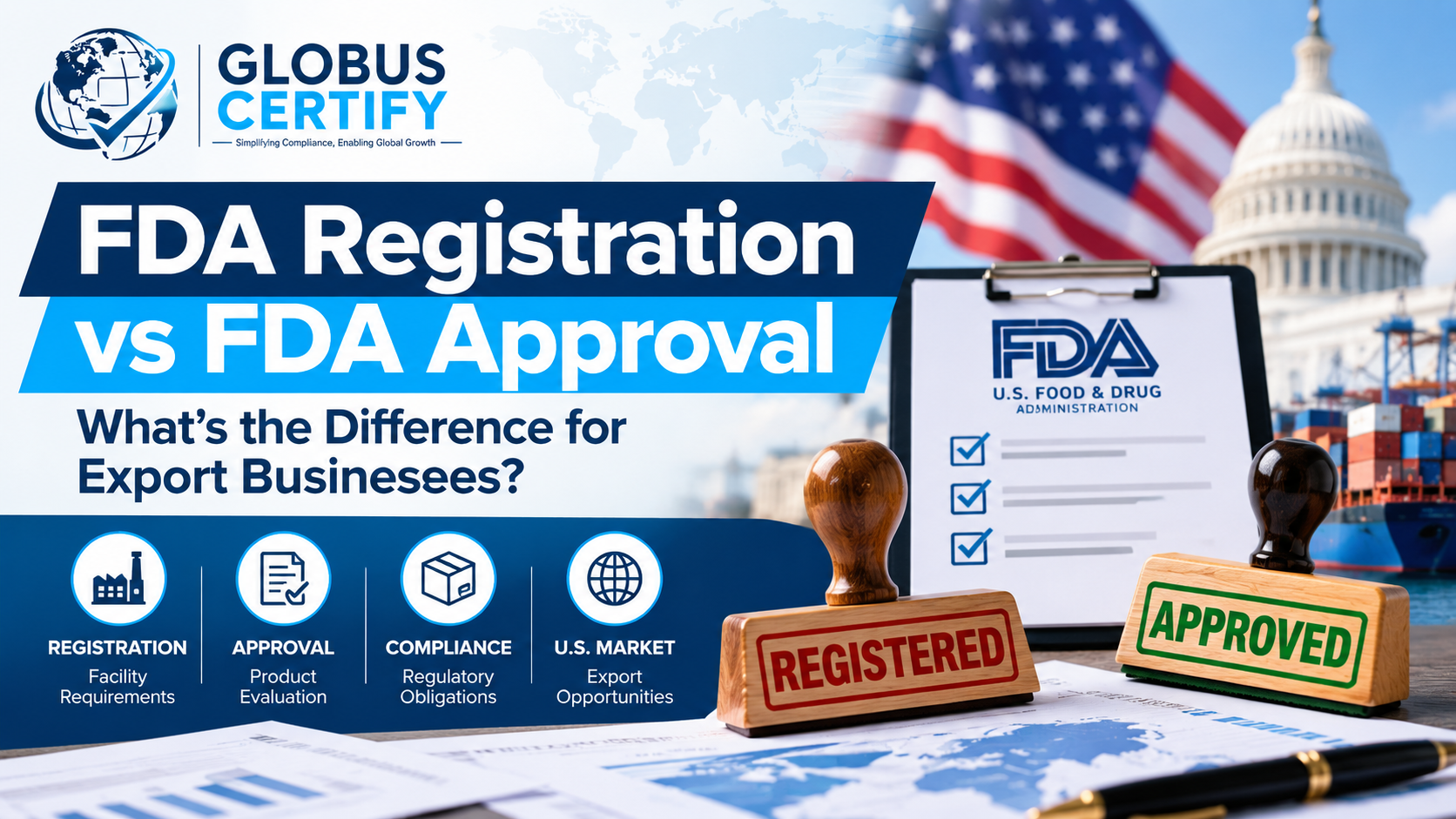
For businesses planning to sell food, dietary supplements, cosmetics, medical products, or other regulated products in the United States, understanding the difference between FDA registration vs FDA approval is essential.
These two terms are often used interchangeably, but they do not mean the same thing. In many cases, a company may need to complete an FDA registration or notification process without receiving an individual product approval from the U.S. Food and Drug Administration.
For Indian manufacturers and exporters, understanding these requirements before entering the U.S. market can help reduce compliance issues, shipment delays, and regulatory risks.
FDA Registration vs FDA Approval: Quick Difference
FDA registration generally refers to registering a facility or establishment with the FDA when registration is required under applicable U.S. regulations.
FDA approval means the FDA has reviewed and authorized a particular product or application for a specific regulated use. FDA approval requirements depend heavily on the type of product.
Therefore, FDA registration does not automatically mean that a product is FDA approved.
What Is FDA Registration?
FDA registration is a regulatory process that applies to certain facilities and businesses dealing with FDA-regulated products.
Depending on the product category, registration requirements can apply to manufacturers, processors, packers, distributors, or other establishments.
For example, certain foreign and domestic food facilities that manufacture, process, pack, or hold food for consumption in the United States may need to register with the FDA.
The registration process can involve providing information such as:
- Facility details
- Business information
- Facility address
- Product or activity information
- U.S. agent information for certain foreign facilities
- Other information required under the applicable regulations
The exact requirements depend on the product category and the company’s activities.
Does FDA Registration Mean FDA Approved?
No.
This is one of the most important distinctions businesses should understand.
Completing an FDA registration does not necessarily mean that the FDA has evaluated and approved every product manufactured by that facility.
Businesses must still comply with the regulations applicable to their products.
What Is FDA Approval?
FDA approval is a different regulatory concept.
For certain products, the FDA may require a formal review and approval before the product can legally be marketed in the United States.
This can involve the submission of scientific, technical, safety, manufacturing, or clinical information, depending on the product.
For example, certain drugs and medical devices can require FDA review and authorization before marketing.
However, not every FDA-regulated product follows the same approval pathway.
This is why businesses should determine their specific regulatory obligations rather than assuming that every product requires the same FDA process.
FDA Registration vs FDA Approval: Key Differences
| FDA Registration | FDA Approval |
|---|---|
| Often relates to a facility or establishment | Generally relates to a specific product or regulatory application |
| May be required for certain regulated businesses | Required only for product categories subject to an applicable approval pathway |
| Does not necessarily involve pre-market product review | Can involve detailed FDA review |
| Does not automatically mean a product is approved | Indicates authorization under the applicable FDA pathway |
| Requirements depend on product category and activity | Requirements depend on the applicable approval process |
The exact regulatory pathway should always be determined based on the product, intended use, manufacturing activities, claims, and applicable U.S. regulations.
Which Products Need FDA Registration?
FDA requirements vary by product category.
Some examples of areas where businesses may encounter FDA registration or establishment-related requirements include:
Food Products
Certain food facilities involved in manufacturing, processing, packing, or holding food for consumption in the United States may need FDA registration.
Businesses may also have other obligations related to labeling, preventive controls, imports, and prior notice.
Dietary Supplements
Dietary supplement businesses can face specific FDA requirements relating to manufacturing, labeling, ingredients, claims, and facility activities.
Registration requirements should be assessed based on the company’s role and activities.
Cosmetics
Cosmetic businesses may have facility and product-related regulatory obligations under the applicable U.S. framework.
The requirements can differ depending on the product and the claims made about it.
Drugs and Medical Products
These categories can involve more extensive regulatory requirements.
Depending on the product, businesses may need establishment registration, product listing, premarket submissions, approval, clearance, or other FDA processes.
Why the Difference Matters for Indian Exporters
For an Indian company entering the U.S. market, assuming that FDA registration equals FDA approval can create compliance problems.
For example, a business may successfully complete a facility registration but still need to address:
- Product labeling requirements
- Ingredient requirements
- Manufacturing requirements
- Product claims
- Import requirements
- Prior Notice requirements where applicable
- Product-specific regulatory requirements
- U.S. agent requirements where applicable
- Recordkeeping and compliance obligations
Therefore, FDA registration should be considered one part of a broader FDA compliance strategy rather than a universal approval certificate.
Does Every Product Need FDA Approval?
No.
The FDA regulates different product categories under different legal and regulatory frameworks.
Some products require premarket approval or clearance before marketing, while other products may follow notification, registration, listing, or post-market compliance systems.
For this reason, businesses should not assume:
“My product is FDA regulated, therefore I need FDA approval.”
The correct question is:
“What FDA regulatory pathway applies to my specific product and business activity?”
That distinction can make a significant difference when planning U.S. market entry.
Common FDA Compliance Mistakes
Businesses entering the U.S. market can sometimes misunderstand the difference between registration and approval.
Common mistakes include:
1. Treating an FDA registration as a certification
FDA registration should not automatically be marketed as an FDA approval or certification.
2. Ignoring product-specific requirements
Facility registration alone does not necessarily address all product compliance requirements.
3. Using unsupported claims
Product claims can affect regulatory classification and compliance obligations.
4. Overlooking labeling requirements
Products entering the U.S. market may need to meet applicable labeling requirements.
5. Assuming every product follows the same FDA pathway
Food, cosmetics, dietary supplements, drugs, and medical devices can have substantially different requirements.
FDA Registration vs FDA Approval: What Should Your Business Do?
Before starting the process, businesses should first identify:
- What type of product are you selling?
- Who manufactures the product?
- Where is the product manufactured?
- What ingredients or materials are used?
- What claims are made on the packaging and website?
- Who is importing the product into the United States?
- Does the product require facility registration?
- Does the product require listing, notification, clearance, or approval?
- What labeling requirements apply?
- Are there additional import or compliance obligations?
Answering these questions helps determine the appropriate regulatory pathway.
FDA Compliance for Indian Exporters
Indian manufacturers and exporters planning to enter the U.S. market should evaluate FDA requirements before shipping products.
A compliance assessment can help identify applicable requirements related to:
- FDA registration
- Product classification
- Facility information
- Labeling
- Ingredients
- Product claims
- Import documentation
- Prior Notice where applicable
- Product-specific regulatory requirements
The exact requirements depend on the nature of the product and the company’s activities.
Frequently Asked Questions
Is FDA registration the same as FDA approval?
No. FDA registration and FDA approval are different regulatory concepts. Registration may relate to a facility or establishment, while approval can involve formal FDA review of certain products or applications.
Does FDA registration mean my product is approved?
No. A facility registration does not automatically mean that an individual product has been approved by the FDA.
Do food exporters need FDA registration?
Certain food facilities that manufacture, process, pack, or hold food for consumption in the United States may need to register with the FDA. Additional requirements may also apply.
Do cosmetics need FDA approval?
Cosmetic products generally follow a different regulatory framework from products that require formal premarket FDA approval. Businesses should assess the applicable requirements based on the product and its claims.
Do dietary supplements require FDA approval?
Dietary supplements do not generally follow the same premarket approval pathway as drugs. However, businesses must comply with applicable FDA requirements relating to manufacturing, labeling, ingredients, claims, and other obligations.
How can Indian exporters determine the correct FDA requirements?
The appropriate pathway depends on the product category, ingredients, intended use, claims, manufacturing activities, and other factors. A product-specific regulatory assessment can help identify applicable requirements.
Final Takeaway
Understanding FDA registration vs FDA approval is an important first step for businesses planning to enter the U.S. market.
FDA registration does not automatically mean that a product has received FDA approval. Different products can have different regulatory pathways, and businesses may need to address additional requirements involving labeling, manufacturing, imports, ingredients, claims, and product-specific regulations.
For Indian exporters, identifying the correct FDA requirements before entering the U.S. market can help create a more structured and compliant market-entry process.
Need help understanding FDA requirements for your product?
GlobusCertify can help businesses assess applicable regulatory and compliance requirements for international market entry.