
Food Export Documentation: Complete Guide for Indian Businesses
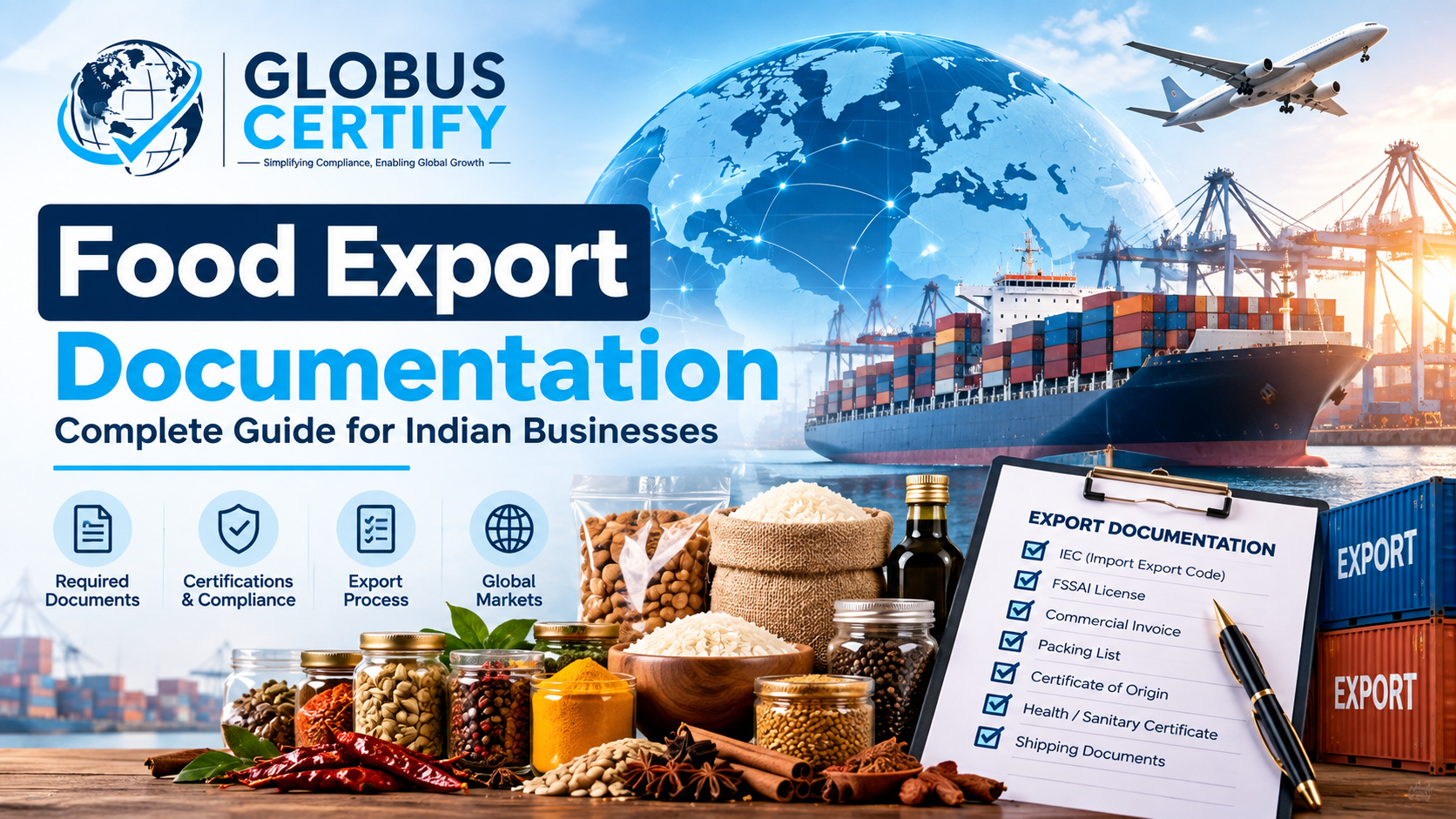
India is one of the world’s major producers and exporters of food products, including spices, rice, processed foods, fruits, vegetables, dairy products, snacks, and packaged foods. However, selling food products in international markets requires more than simply finding an overseas buyer. Proper food export documentation is essential for completing customs procedures, meeting regulatory requirements, and ensuring that products can legally enter the destination country.
For Indian businesses planning to export food products, understanding the required documents and compliance requirements can make the export process smoother and reduce the risk of delays.
What Is Food Export Documentation?
Food export documentation refers to the collection of legal, commercial, regulatory, and shipping documents required to export food products from India to another country.
The exact documents may vary depending on the type of food product, destination country, buyer requirements, and applicable regulations. Exporters should therefore identify the requirements of both Indian authorities and the importing country before shipping.
Important Documents Required to Export Food Products from India
1. Import Export Code (IEC)
An Import Export Code, commonly known as IEC, is generally required for businesses involved in importing or exporting goods from India. It helps identify the exporter during international trade transactions.
Businesses should ensure that their IEC information is accurate and updated before starting export activities.
2. FSSAI License
Food businesses operating in India may need an appropriate FSSAI license depending on their activities and products. For food exporters, maintaining the applicable FSSAI compliance is an important part of the overall food export requirements in India.
The license and product-related information should be consistent with the business’s actual operations.
3. Commercial Invoice
A commercial invoice contains important information about the transaction, such as:
- Exporter’s and buyer’s details
- Product description
- Quantity
- Price
- Currency
- Payment terms
- Country of origin
It is an important document for customs clearance and international trade records.
4. Packing List
A packing list provides details about how the goods are packed. It can include the number of packages, product quantities, package dimensions, gross weight, and net weight.
Accurate packing information can help customs authorities and logistics providers handle shipments efficiently.
5. Certificate of Origin
A Certificate of Origin confirms the country where the exported goods were produced or manufactured. Some importing countries or buyers may require this document for customs clearance or preferential tariff treatment.
The specific requirements depend on the destination market and applicable trade agreements.
6. Bill of Lading or Airway Bill
The Bill of Lading is generally used for sea shipments, while an Airway Bill is used for air shipments. These documents provide details about the transportation of the goods and are important for shipment tracking and delivery.
7. Health or Sanitary Certificates
Depending on the product and destination country, exporters may need health, sanitary, phytosanitary, or other regulatory certificates.
These documents demonstrate that the relevant food products meet applicable safety or health requirements.
Food Export Certification and Product-Specific Requirements
Different food products can have different compliance requirements. For example, exporters dealing with organic products may need appropriate organic certification for making organic claims in the destination market.
Similarly, products entering markets such as the United States or European Union may need to comply with specific food safety, labeling, packaging, and documentation requirements.
Therefore, businesses should not rely on a single standard checklist for every shipment. Food export compliance should be evaluated according to the product and target market.
Food Export Documentation Checklist
Before shipping food products internationally, businesses should review the following checklist:
- IEC and business registration details
- Applicable FSSAI license
- Commercial invoice
- Packing list
- Certificate of Origin, where required
- Shipping documents
- Product specifications
- Applicable health or sanitary certificates
- Product testing or laboratory reports, where required
- Food labeling compliance
- Organic certification, if applicable
- Importing-country regulatory documents
- Buyer-specific documentation
Common Food Export Documentation Mistakes
Incomplete information, incorrect product descriptions, inconsistent quantities, missing certificates, and non-compliant labels can create problems during customs clearance or at the destination.
Another common mistake is preparing documents only after receiving an order. Exporters should understand the regulatory requirements before finalizing their product, packaging, and shipment.
How GlobusCertify Can Help
Understanding food export documentation can be challenging, particularly when a business is entering a new international market. Regulatory requirements can differ significantly between countries and product categories.
GlobusCertify helps businesses understand certification and compliance requirements related to food products and international markets. Professional compliance support can help exporters identify applicable requirements, organize documentation, and prepare for market entry.
Conclusion
Proper food export documentation is an important part of international food trade. Indian businesses need to understand the documentation, certification, labeling, and regulatory requirements applicable to their specific products and destination markets.
By preparing documents accurately and reviewing compliance requirements before shipment, exporters can make the export process more organized and reduce avoidable delays. Whether you are exporting spices, packaged foods, rice, processed products, or other food items, having the right documentation is an essential step toward successful international trade.